
Two Temple Place
We delivered two Funshops at Two Temple Place in the Spring of 2025. These Funshops were part of a programme of cultural events hosted by Two Temple Place, to accompany their ‘Lives Less Ordinary’ exhibition.
The exhibition, which ran from 25th January - 20th April 2025, showcased myriad pieces of visual art created by working-class artists that explored nuanced experiences of working-class life in Britain. The Funshops were a celebration of identity and experience - joyous from beginning to end.
Snapshot…
Collaboration and Intention
Two Temple Place is a beautiful historic house situated on Victoria Embankment in London. It was commissioned by and built for William Waldorf Astor in the 1890s. In 2011, it was opened to the public as a gallery and became the first London venue to specifically showcase publicly owned art from UK regional collections.
Two Temple Place hosts a year-round programme of community and cultural events, including an annual exhibition. They seek to offer opportunities to people from diverse backgrounds and use the building, which was once a symbol of extreme wealth, privilege, and hierarchy, as a ‘tool for conversation, education, and advocacy’.
When Two Temple Place approached us about organising a Funshop with them, we were delighted. They share our belief that creativity and sharing culture can help to build communities and overcome divisions in our society. The ‘Lives Less Ordinary’ exhibition challenged reductive and simplistic narratives of working-class struggle in British arts institutions.
The exhibition consisted of artworks created by working-class artists who presented alternative and authentic narratives that highlight working-class pride, joy, hopefulness and more. What is most significant is that the exhibition celebrated working-class people defining their experiences and communities on their own terms.
Much of the existing South Asian population in Britain today belongs to the working-class. People from all generations have fascinating stories to tell about the hardships and joys of the working-class, immigrant experience. Sarees, and dress in general, are a way to share those stories and honour our experiences and memories.
For our Funshops with Two Temple Place, we wanted our participants to feel pride in where they have come from and the journeys they have made. The Funshops were designed to acknowledge our varied identities and the importance of having agency over our stories and how we share them with the world.
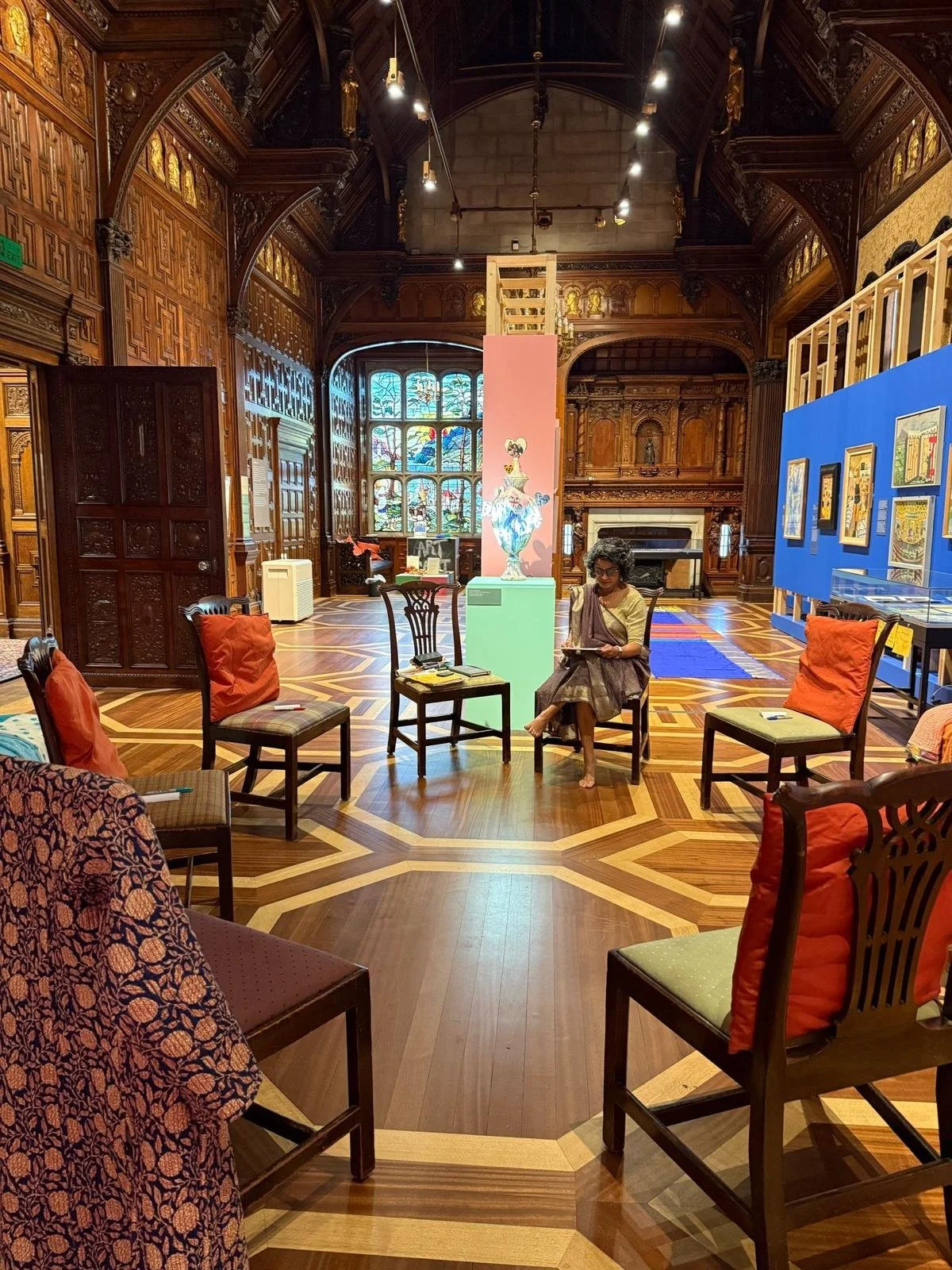
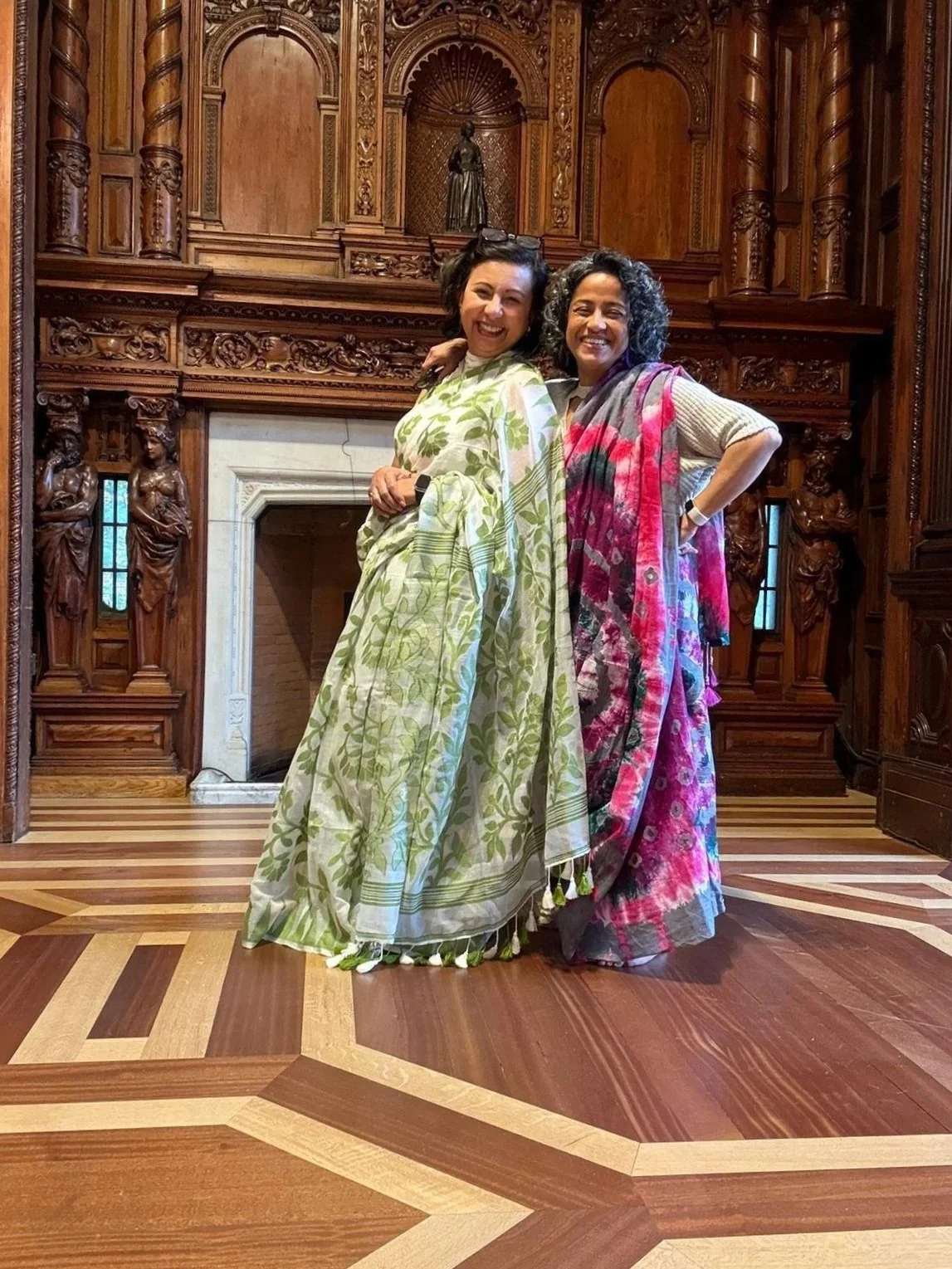
The Funshop: Discussions and Thoughts
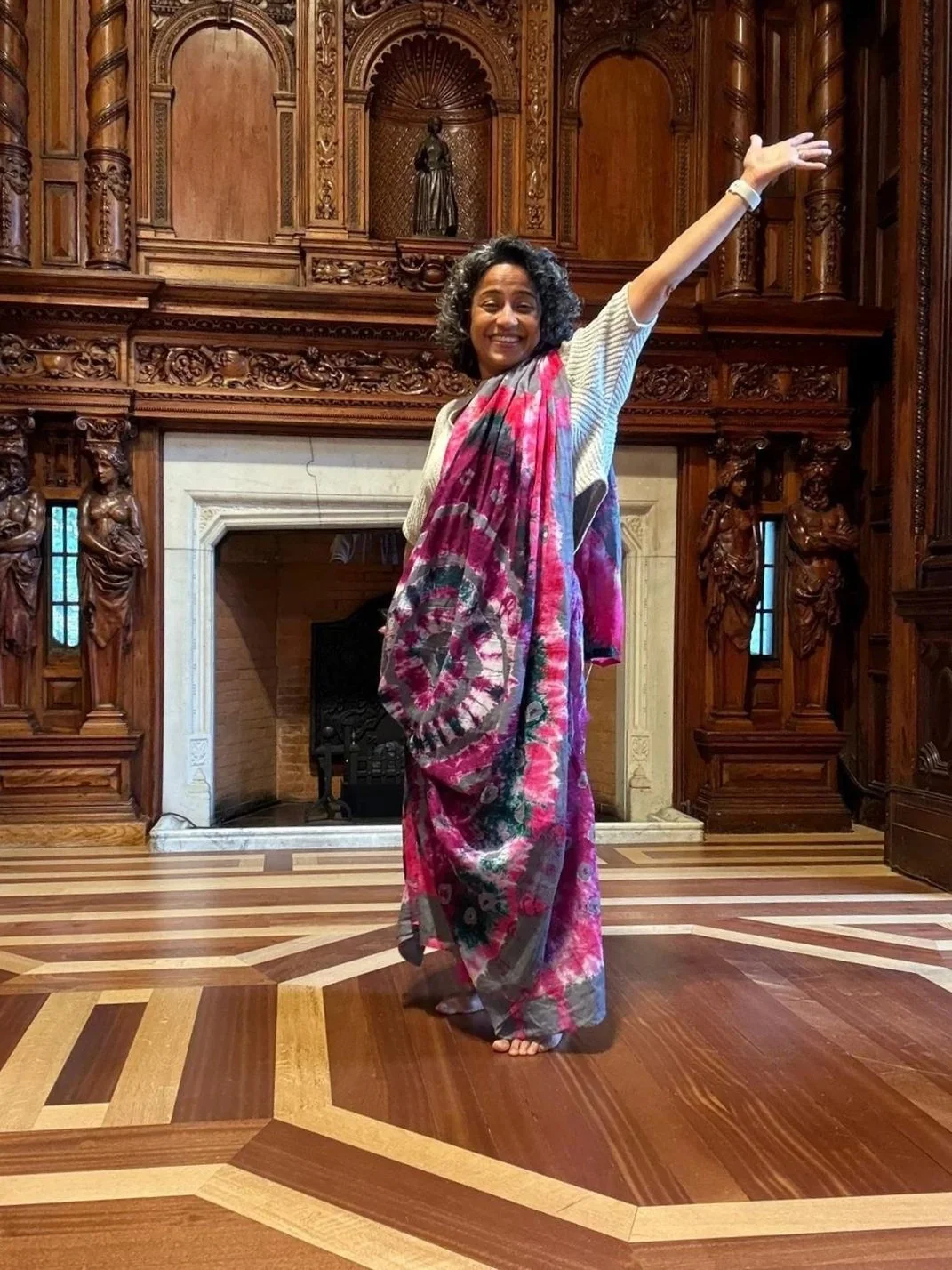
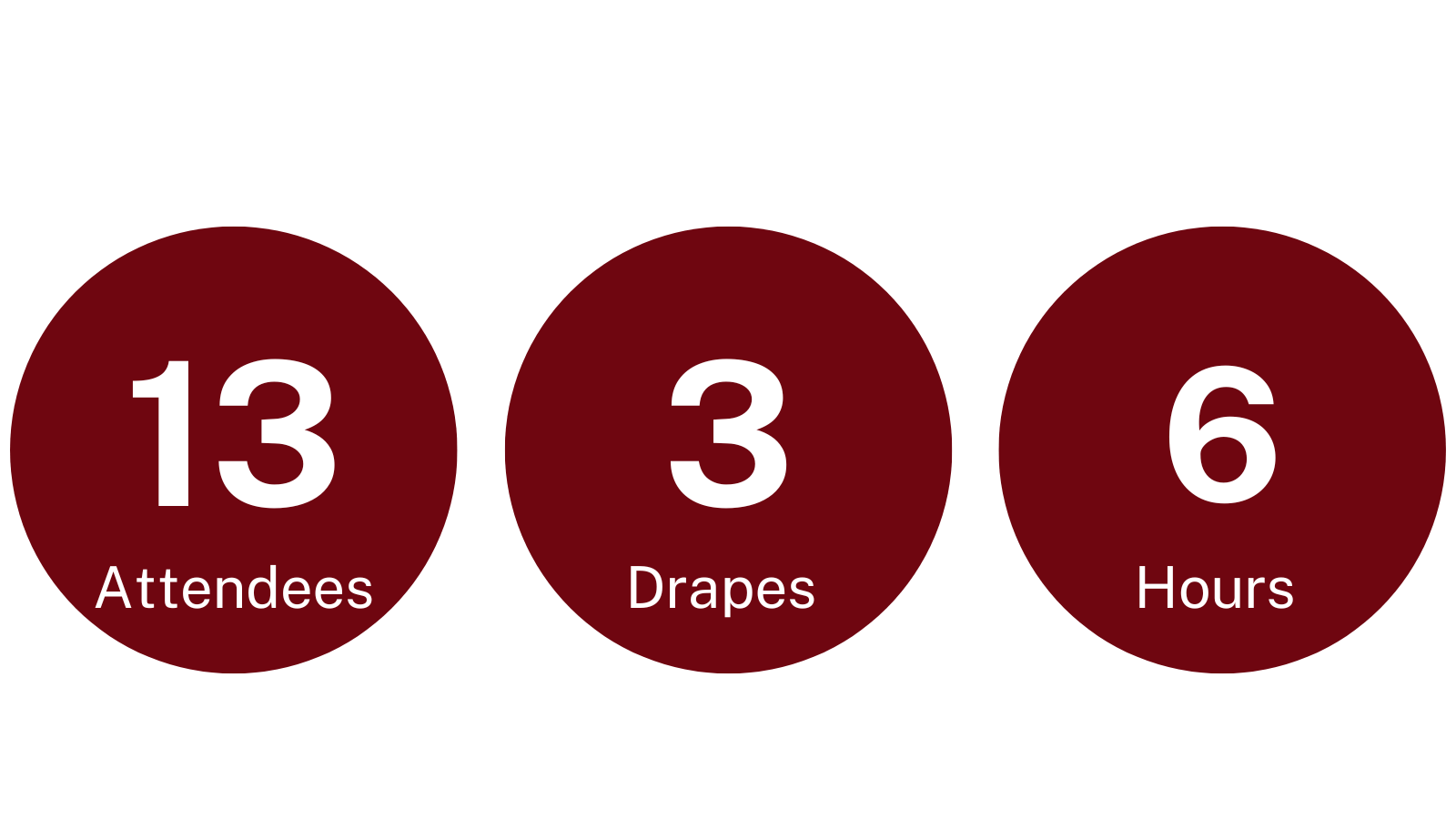
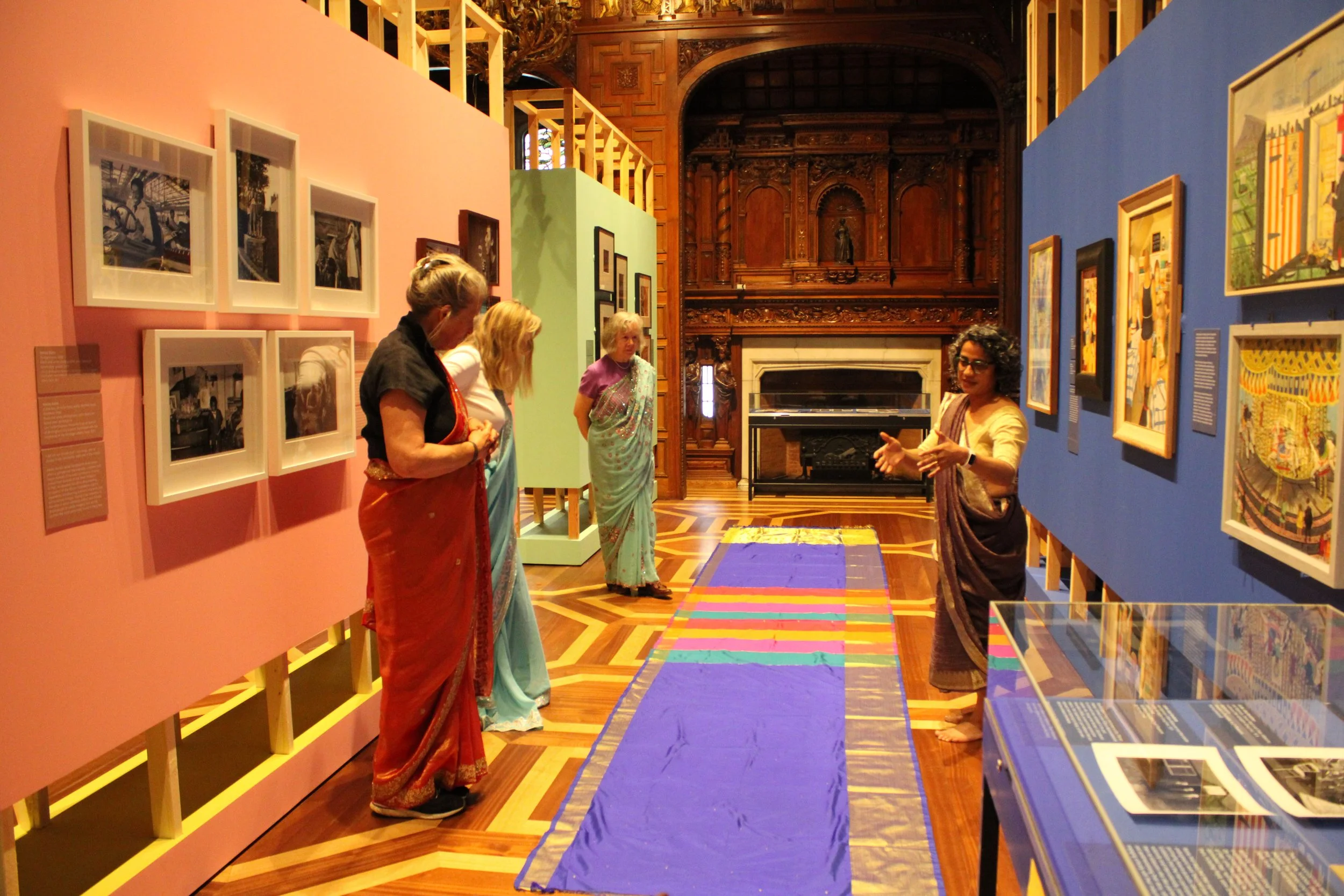
We hosted two Funshops at Two Temple Place; the first on the 14th April 2025 and the second on the 15th May 2025. Both Funshops were small groups, allowing us to get to know one another and build a sense of comfortability. We began with short introductions and spent some time exploring the setting and exhibition. Being in a venue as beautiful as Two Temple Place inspired excitement and creativity which set the tone perfectly for the sessions.
The instructors, Poppy and Rosey, began initial discussions by talking about the history of the saree and how saree weaves have evolved over time. Participants shared that they really enjoyed learning so much about the history, fabrics, and different saree drapes. They felt that being given contextual information enriched their experiences of wearing a saree.
Poppy and Rosey shared their own stories of growing up in Portsmouth and London, seeing people from their family and community wearing sarees to reflect their cultural upbringing. Sometimes their loved ones would experience discrimination and racial abuse for wearing South Asian clothes in a largely White-British setting, yet they continued to wear them.
This was due to a few different reasons; the saree was what they were used to wearing and therefore comfortable and it was also what was expected of them within the Bengali community and from family. Sometimes women lacked agency over what they wore and felt external pressure to continue wearing sarees. At the same time, sarees visually symbolised South Asian culture and wearing them, especially on special occasions, was a point of pride for many people.
Poppy and Rosey’s stories highlighted how political the saree is as a garment. It represents celebration of identity and protest against forced assimilation, but also upholding traditional gender expectations and reducing women’s agency, for the women who were pressured into wearing sarees by their families.
We hope that the Funshops can challenge some of the latter connotations and champion practicing agency in dress. We want to empower people to wear clothes that make them feel confident in who they are and celebrate every part of their identity.
One participant shared that she came along to the Funshop because she was keen to learn more about the saree. She had already seen and experienced the saree through her Bangladeshi friend and neighbour. She wanted to learn how to drape the saree on herself, to surprise her friend and learn more about the Bangladeshi culture within her neighbourhood.
British-Bangladeshi culture thrives in pockets around the UK, especially in areas like London, Birmingham and Manchester, where Bangladeshi immigrants have contributed significantly to the food and textile industries and the cultural landscape of the region.
It was wonderful to hear the participant wanted to learn more about the culture that the saree comes from, to appreciate the saree for more than its aesthetic value. Our Funshops champion the idea of cultural appreciation; inviting people from non-South Asian backgrounds to experience South Asian culture and better understand the British-South Asian experience.
We were overjoyed to see how enthusiastic the participant was about the saree and how comfortable she felt wearing one. She expressed that she wanted to wear one home to show her neighbour so we gifted her one of the sarees from our selection. We hope that it will be the start of a big and beautiful collection of sarees!
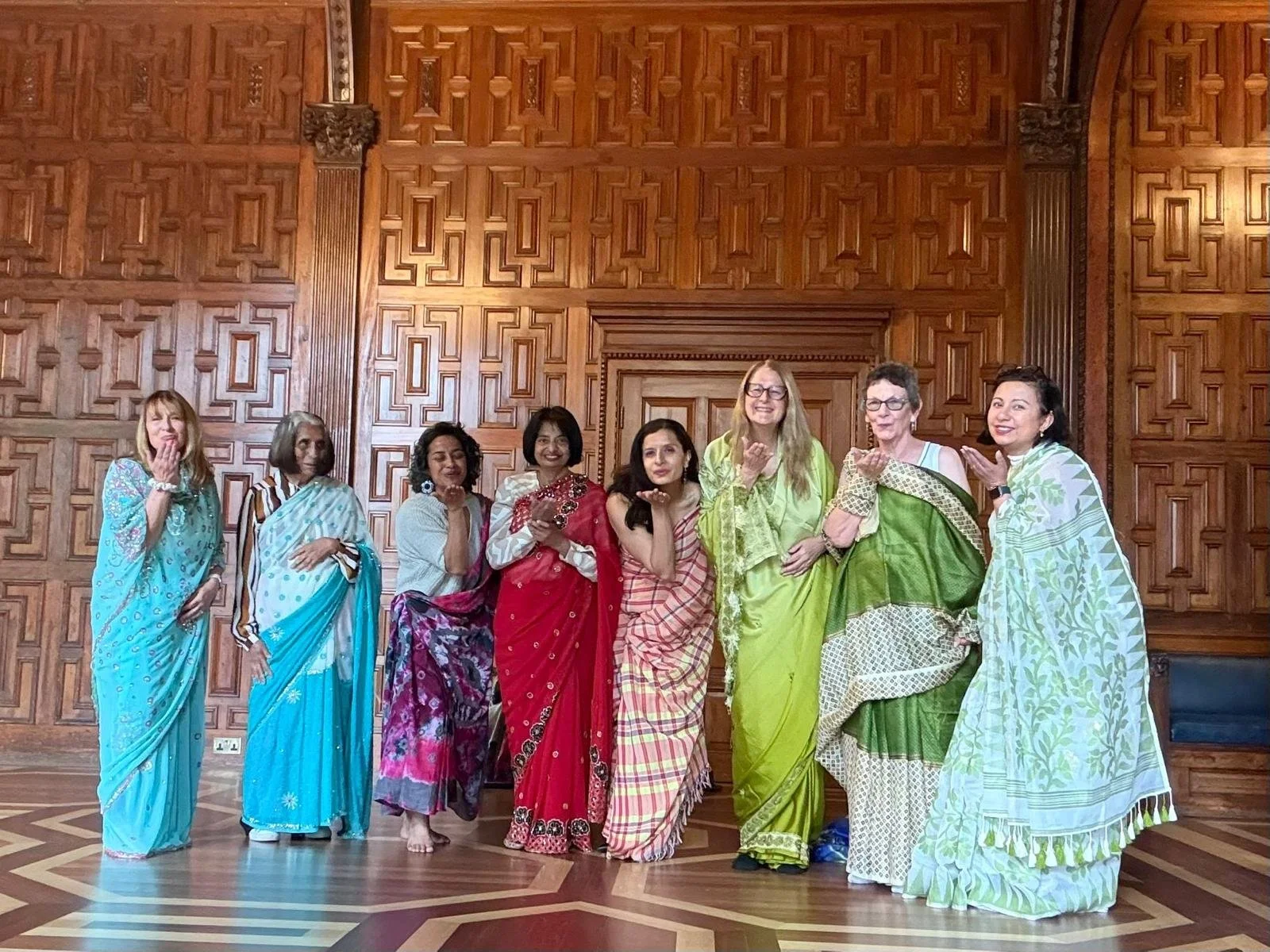
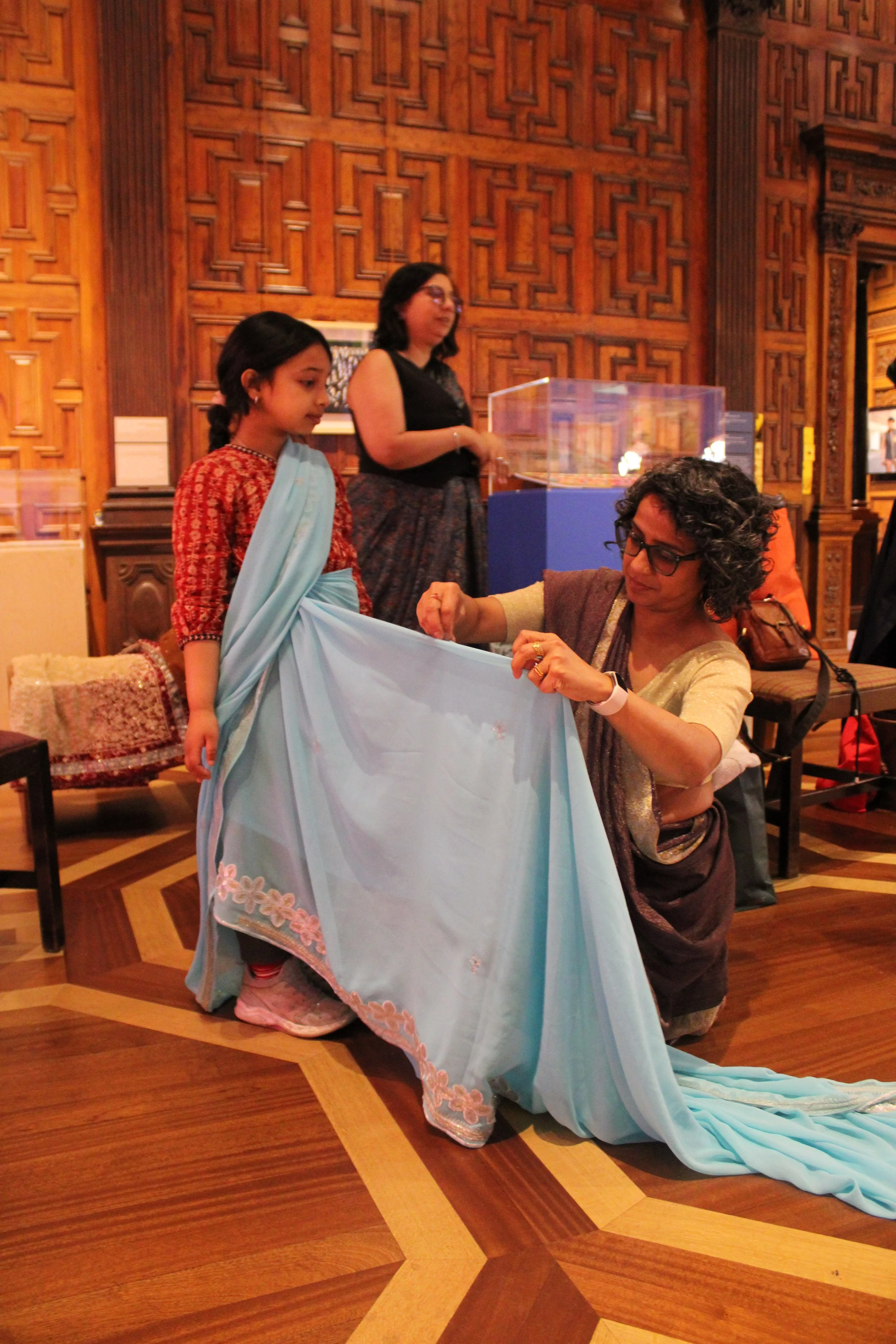
The Funshop: Draping Up and Reflections
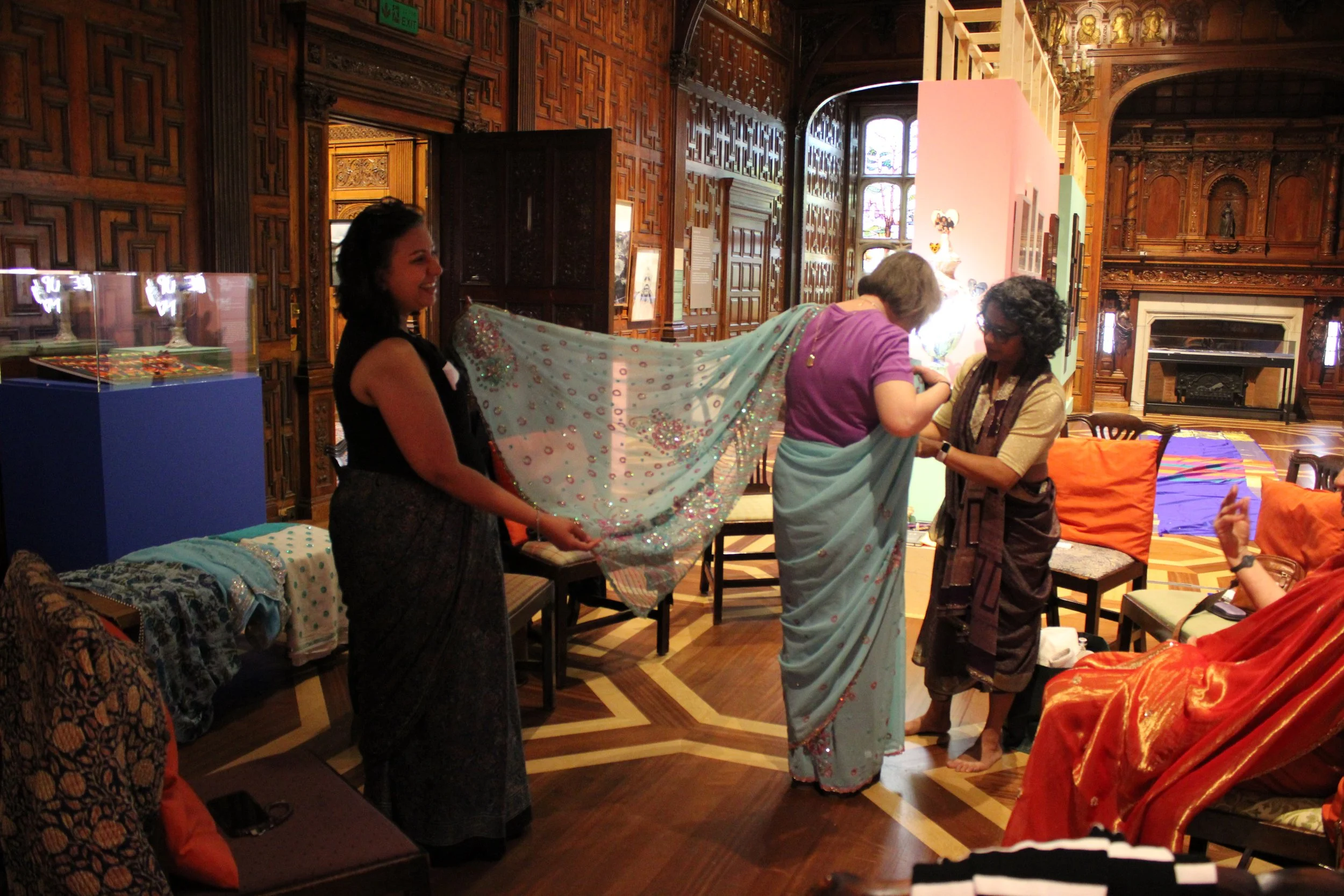
Poppy and Rosey demonstrated how to drape a saree in the nivi style to the group while they followed along. As we draped up, we thought about how we use clothing and personal style to reflect our personalities and sense of self.
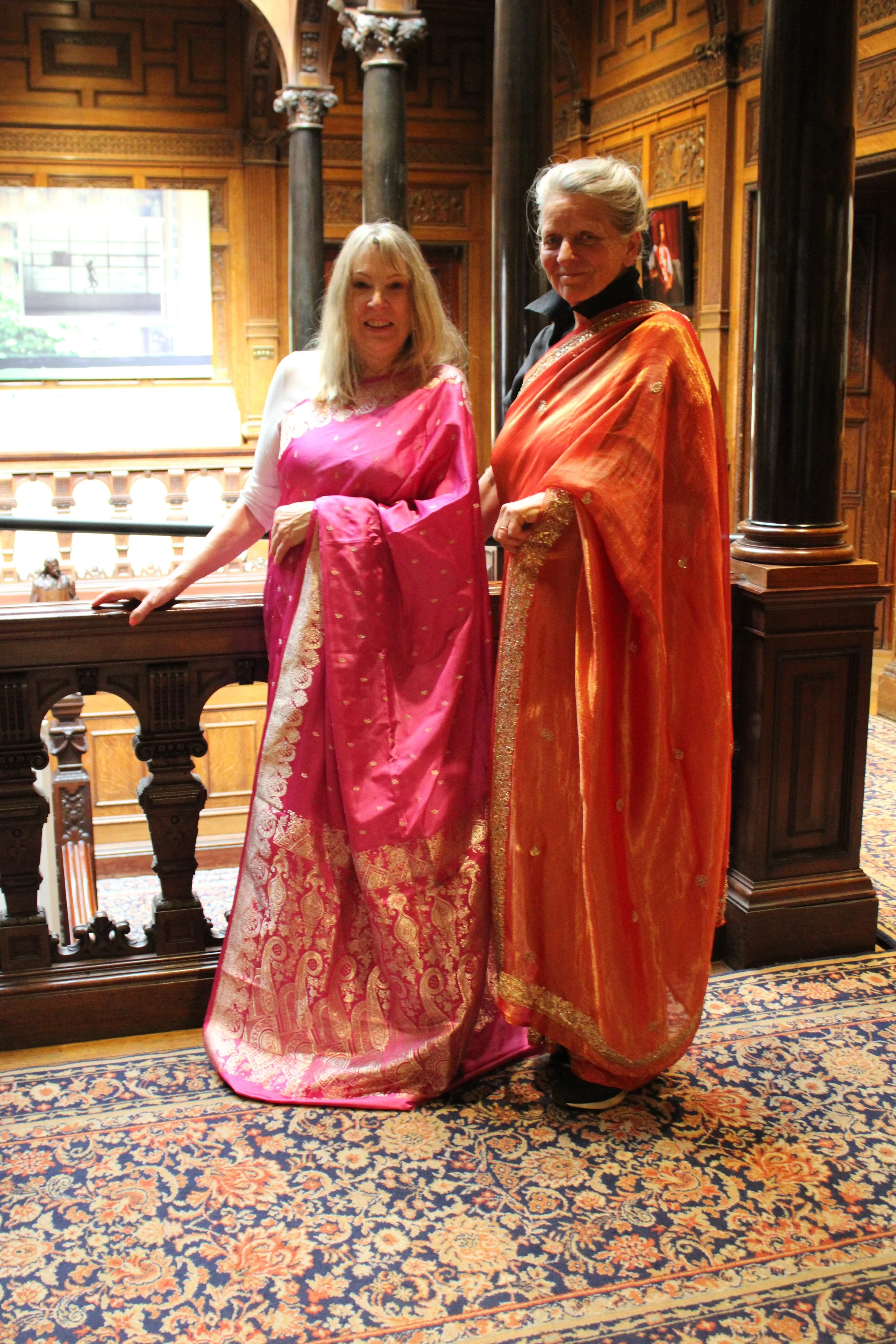
One participant, an ex-sports teacher, described her usual style as ‘bland’, but confessed she loved the idea of wearing bright colours like oranges and yellow. She chose an orange and cream embellished saree to drape on herself in the nivi style. On seeing herself in the saree, she beamed and simply commented, ‘stunning’. This was a powerful moment and a real testament to the power of dressing for joy.
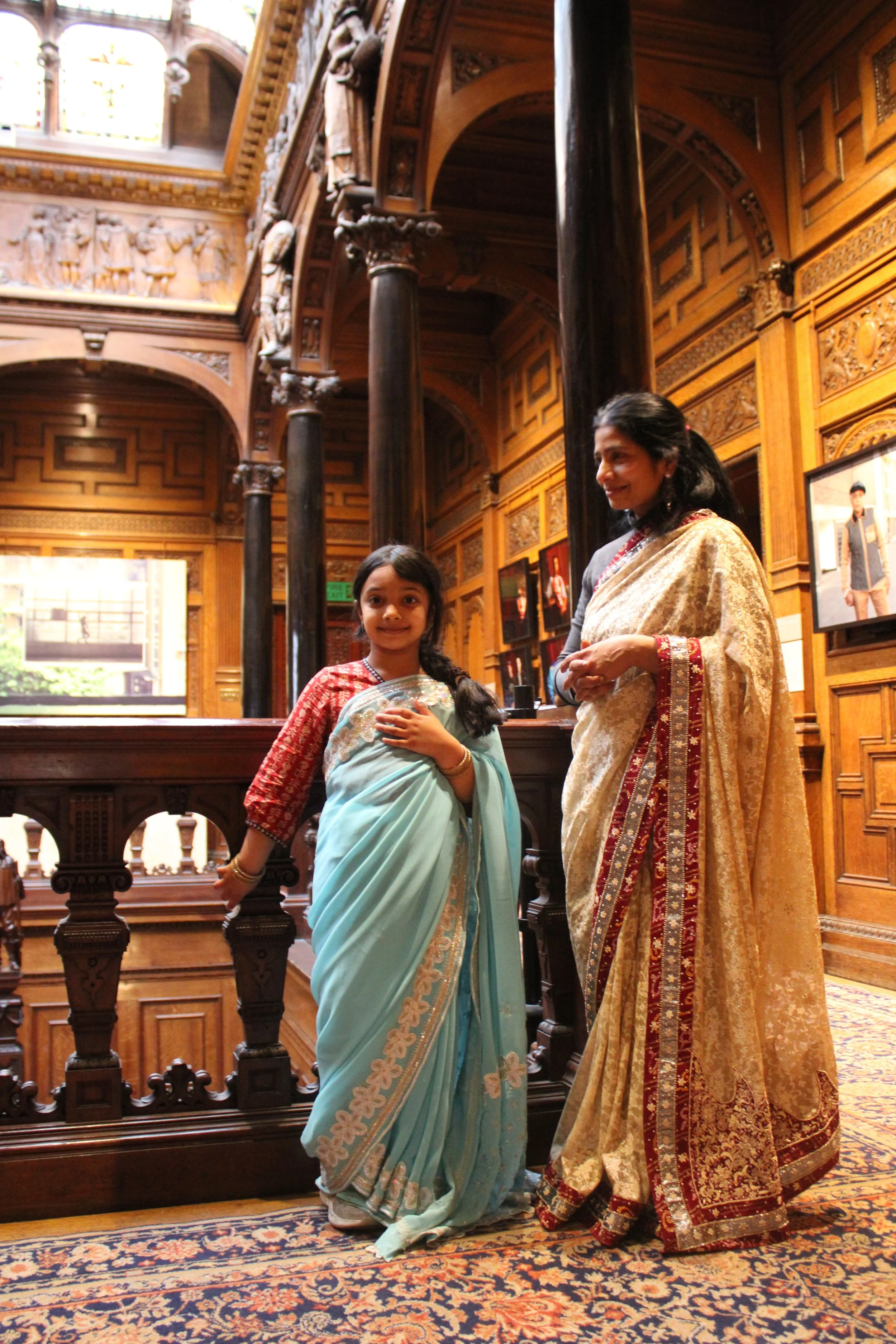
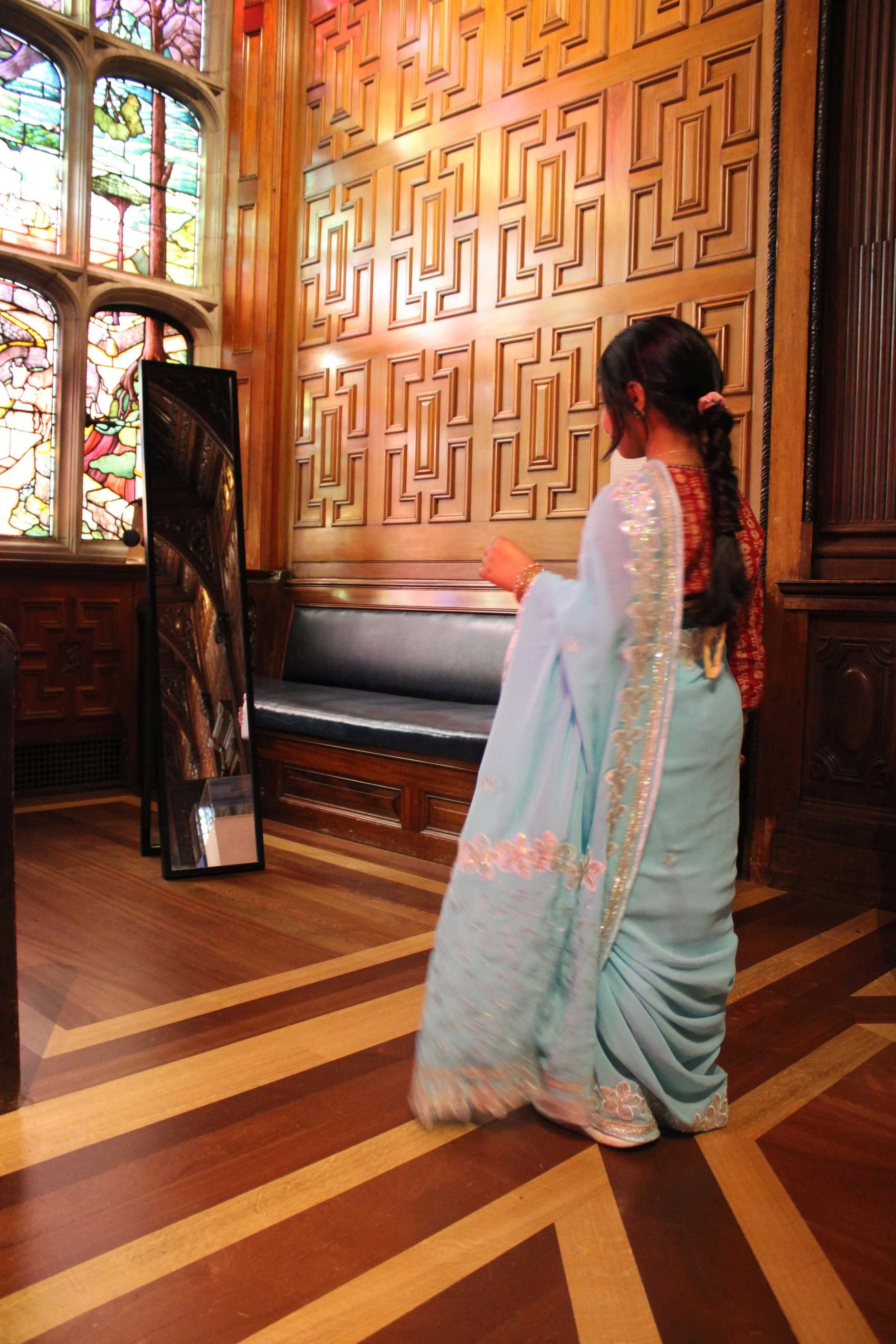
At the first Funshop of the two, we were joined by a mother and daughter duo. They came from a South Asian background, but the daughter, who was only eight, had never experienced wearing a saree. Her mum had never felt confident to drape a saree on her daughter, which motivated them to attend the Funshop. Poppy and Rosey helped to drape the daughter in a saree. She couldn’t have been happier to be wearing a saree and ‘playing dress-up’. The moment reminded everyone of the joy of dressing-up as a child and how fun it is to let your imagination run free without considering other people’s opinions.
The whole group was delighted at how much the saree suited our youngest participant. It was a special experience for both mum and daughter and for us to witness! The duo enjoyed the experience so much that they posed for a photoshoot with photographer Poppy Parry all around Two Temple Place!
After we had styled the nivi drape, Poppy and Rosey demonstrated how to drape in the Kaccha/Dhoti variation. We took our time experimenting with drapes and working out what felt right. The participants shared that the environment was relaxed, generous and welcoming, which made them feel confident enough to be creative and innovative with draping. By the end of the first Funshop, several participants were draping independently and coming up with their own drape variations!
At the second Funshop, we were joined by a participant who had adopted a nomadic lifestyle and was living out of a backpack in a boathouse. She spoke about how her travels had broadened her ideas of culture and inspired her to learn more about cultures unfamiliar to her own.
She shared that she loved learning about the fluidity of the saree and how so many different drapes exist because people have adapted the saree to their lifestyles and needs. This resonated with her; as someone who often travels light, she was delighted at how she could create hundreds of different looks with one saree and at how it could be easily packed up in a travel bag but still retained a luxurious look. Her outlook conveys the wonder, joy, and practicality of the saree - all the reasons why we love it so much!
Another attendee brought along their own saree that they had been gifted many years prior, while on a trip in India. The saree was a beautiful silver silk Banarasi saree that she had never known how to drape on herself. While following along with the nivi demonstration and draping the saree on herself, she shared some of her fond memories of travelling and of Indian culture. The Funshop gave her a renewed appreciation for her garment and its origin story.
When everybody was draped up and ready to see their final looks, we played music and asked everyone to step up to the mirror individually while the rest of the group cheered them on from the sides. It was a beautiful experience to share with the group, the room felt full of love and support.
We would like to thank Two Temple Place for inviting us to host two Funshops in their amazing venue as part of their ‘Lives Less Ordinary’ exhibition. It was an honour for us to play a part in their mission to use culture and creativity to bring people together.
The Experience…